


Most emails go unopened. Your subscribers likely scan their inbox in seconds, deleting anything that doesn’t immediately earn a click. That means the email you spent an hour writing is competing with dozens of others for that same half-second of attention.
The subject line is the only thing standing between your email and the trash folder. Everything inside — the content, the design, the offer — only gets a chance if the subject line earns the click first.
The good news: great subject lines follow patterns. The emails people can’t resist opening use a handful of proven formulas. We’ve seen this consistently in our own businesses as well as with our customers.
Once you understand the logic behind these formulas, you can write a compelling subject line in under a minute.
Below, you’ll find 100+ subject line examples organized by formula and email type, the psychology behind why each one works, and the five mistakes that quietly kill open rates even when you’re doing everything else right.
In This Article:
What Makes an Email Subject Line Worth Opening?
A great subject line does one thing: it makes the reader feel like they can’t afford not to open the email. That sounds simple, but it requires knowing what your reader actually wants — and what they’re afraid of missing.
The first thing that separates high-performing subject lines from forgettable ones is specificity.
For example, “5 ways to grow your email list this week” will almost always outperform “tips for email marketing” — not because of length, but because specific promises signal real value. Vague subject lines make readers work too hard to figure out if the email is worth their time.
Length matters, but not the way most people think. The goal isn’t to write short — it’s to be readable on mobile. Mobile email clients vary in how much of your subject line they display — most trim it well before 60 characters on smaller screens.
So, it’s always best to put your most important words first so they’re never cut off. “You left something in your cart, and it’s almost gone” is better than “Just a quick reminder that the items in your shopping cart are still available but going fast.”
One useful trick is to write your subject line, then cut it in half. You’ll almost always come up with a better version.
Finally — and this is the one rule that overrides everything else — your subject line has to match what’s inside.
Clickbait subject lines might spike your open rate once. But a subscriber who opens an email and finds something completely different than what was promised won’t open the next one. Trust takes months to build and one misleading subject line to lose.
The Inbox Decision
The best email subject lines are specific, front-load the most important words for mobile readers, and always deliver on what they promise. Specificity signals value. Trust keeps people opening future emails.
6 Email Subject Line Formulas That Work
Every high-performing subject line you’ve ever opened fits into one of a handful of formulas.
These aren’t gimmicks — they’re patterns that work because they tap into how people make quick decisions. Learn the formula, and you can write a strong subject line for any email in under a minute.
Formula 1: The Curiosity Gap
The curiosity gap works by giving readers just enough information to be intrigued, but not enough to satisfy the question without opening.
The brain hates incomplete information — and a well-written curiosity subject line exploits that. The key is to tease something genuinely interesting, not manufacture false mystery.
I’d suggest saving this formula for when you have a real insight, surprising data-driven result, or a counterintuitive finding — that’s when it really lands.
Here are 10 curiosity-gap subject lines you can adapt for your next campaign:
- The one thing we changed that doubled our email opens
- You’re making this subject line mistake (here’s the fix)
- What nobody tells you about high open rates
- We ran the numbers — here’s what we found
- The reason your emails get ignored (it’s not what you think)
- This email marketing stat surprised us
- Why your most popular post might actually be hurting you
- What happened when we removed this word from every subject line
- The thing most email guides get completely wrong
- Something interesting happened when we tested this
Used sparingly, this formula builds real anticipation — but overuse it and your subscribers will start skipping anything that feels like a tease.
Formula 2: The Urgency Hook
Urgency works — when it’s real. “Sale ends at midnight” drives opens because people genuinely don’t want to miss a deal. But manufactured urgency (“This is your FINAL warning!!!”) is easy to spot and trains subscribers to distrust your subject lines. Only use urgency when there’s a genuine deadline or limited quantity, and be specific about what it is.
Here are 10 urgency-based subject lines that earn the click without manufacturing false pressure:
- Sale ends at midnight — last chance
- Only 3 spots left at this price
- Your free trial expires in 24 hours
- This price goes up tomorrow
- Today only: 40% off sitewide
- 48-hour flash sale — ends tonight at 11:59 PM
- We’re closing the cart in 6 hours
- Your coupon expires tonight — don’t forget
- Last day to save 25% on [Product/Category]
- [First Name], your access expires soon
One well-timed urgency email outperforms three that feel manufactured. The moment urgency becomes routine in your campaigns, it stops working.
Formula 3: The Personalization Play
Using a subscriber’s first name in the subject line still works — but it works best when the personalization goes beyond just the name.
Subject lines that reference what someone bought, what they browsed, or where they are in your funnel feel relevant in a way that generic emails don’t.

Behavioral personalization (“based on what you bought last month”) outperforms name personalization alone. That level of relevance starts with segmenting your list by behavior — grouping subscribers by what they do so you can send the right message to the right person.
Here are 10 personalization subject lines that go deeper than just a first name:
- [First Name], here’s your personalized report
- Based on what you bought last month…
- [First Name], we noticed you haven’t logged in lately
- Your account summary for [Month]
- Picked just for you: this week’s top picks
- You left something behind, [First Name]
- We saved your favorites, [First Name]
- [First Name], a quick note before you go
- [First Name], don’t let this expire
- Your next step is waiting, [First Name]
The deeper the personalization, the more relevant the email feels — and relevance is what keeps people on your list long after the welcome email novelty wears off.
Formula 4: The Specific Number
Numbers make vague promises concrete. “A few email tips” could mean anything. “7 email subject line formulas with real examples” tells the reader exactly what they’re getting and how much of it. Non-round numbers tend to feel more credible than round ones — “17” sounds like the result of actual counting, while “20” sounds like a number you picked to hit a milestone.
Here are 10 number-driven subject lines that work across different email types and goals:
- 17 subject line formulas (with real examples for each)
- 3 reports every website owner should check every week
- The 5-minute fix that lifted our open rate by 21%
- 47 email templates you can swipe right now
- 7 ways to write better subject lines starting today
- We analyzed 1 million subject lines — here’s what we found
- 5 mistakes quietly killing your open rates
- The 12-word subject line formula that gets 40%+ opens
- 3 things every email subject line must do
- 81 abandoned cart subject lines — and the one that works best
The number does two things: it sets expectations and signals that you did the work. Both build the credibility that keeps people opening your next email.
Formula 5: The Direct Benefit
Sometimes the most effective subject line is the most obvious one: tell people exactly what they’ll get and why it’s worth their time. This formula works especially well for how-to emails and resource-heavy newsletters.
No tricks, no teasers — just a clear, honest promise. Readers who open this kind of email tend to be highly engaged, because they knew exactly what they were clicking on.
Here are 10 direct-benefit subject lines that set clear expectations and deliver on them:
- Get more email opens with these 5 subject line tweaks
- How to write subject lines your subscribers actually want to open
- Double your open rate without changing your send time
- Write better subject lines in 10 minutes
- The fastest way to improve your email marketing results
- Turn more subscribers into buyers with smarter follow-up emails
- Save 2 hours a week on email — here’s how
- Get more traffic from your email list starting today
- The easiest way to see which emails your readers actually open
- Grow your list faster with these proven opt-in page tips
The tradeoff is that this formula won’t generate curiosity-driven opens — but the readers who do click tend to be highly engaged, which makes follow-through easier.
Formula 6: The Question Hook
A well-placed question makes readers stop and think — “Wait, am I making that mistake?” The best question subject lines challenge an assumption the reader holds or name a problem they suspect they have.

The key word is well-placed: don’t open every email with a question. And never use a question so broad it could apply to anyone (or no one).
Here are 10 question-based subject lines worth testing with your list:
- Are you making this subject line mistake?
- What does your open rate actually tell you?
- Sending emails nobody opens? Here’s why
- Is your email list actually growing — or just getting bigger?
- Why are people unsubscribing from your list?
- When was the last time you tested your subject lines?
- Are your abandoned cart emails too pushy?
- Could one better subject line change your whole campaign?
- What would 5% better open rates mean for your revenue?
- Is your email tracking actually set up correctly?
The key is to ask a question your reader is already asking themselves — not one you invented hoping it would resonate.
Email Subject Lines by Type
Different emails have different goals, and your subject line should match. A re-engagement email that sounds like a promotional blast will get deleted.
A welcome email that feels urgent will confuse new subscribers. Here are subject line examples organized by the email type they’re designed for — swipe the ones that fit your next campaign.
Promotional Email Subject Lines
The goal of a promotional email is to drive action — a click to a sale page, a product launch, or a limited-time offer. Subject lines here need to feel exciting without feeling desperate. Lead with the offer or the outcome, not the mechanics of the deal.
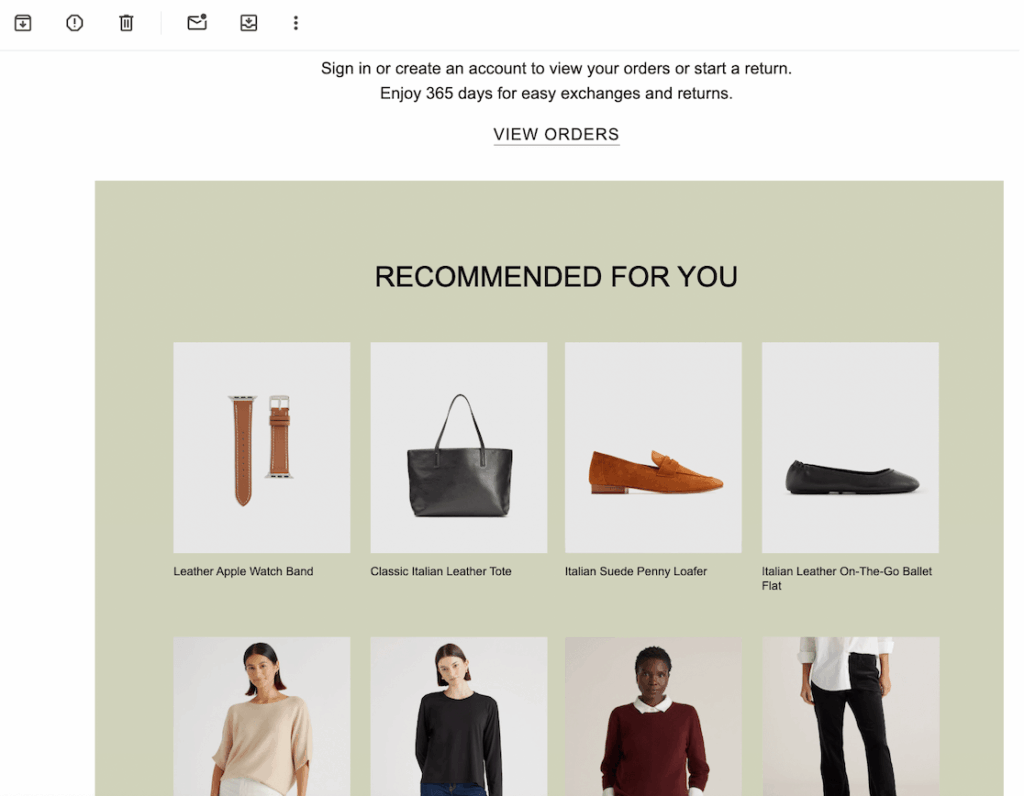
Here are 10 promotional subject lines that lead with the offer, not the excitement:
- Your exclusive 30% off ends tonight
- New arrival: [Product Name] is here
- We made something for you — take a look
- The sale everyone’s been waiting for starts now
- Last day to save 25% on [Category]
- Just dropped: [New Product or Feature]
- Your VIP early access is waiting
- [First Name], we have a gift for you
- Members-only preview: new collection live now
- This deal won’t last — shop before midnight
The best promotional emails feel like a well-timed heads-up from someone who thought of you — not a broadcast trying to extract a purchase.
Welcome Email Subject Lines
Your welcome email is the one email almost everyone opens — welcome emails consistently see the highest open rates of any email type you’ll send.
That’s your best chance to set expectations, deliver on whatever you promised to get the sign-up, and make a strong first impression. You’ll want to keep the subject line warm, clear, and specific about what’s inside.
Here are 10 welcome email subject lines that make a strong first impression:
- You’re in — here’s what happens next
- Welcome to [Brand] — your free guide is inside
- Start here: the 3 things that actually move the needle
- Thanks for joining — your welcome gift is inside
- [First Name], welcome to the community
- You just made a smart move — here’s your first step
- Your account is ready. Let’s get started.
- One thing to do right now (it takes 2 minutes)
- You’re officially part of the [Brand] family
- Welcome aboard — here’s what to expect from us
A strong welcome email sets the tone for everything that follows. It’s worth spending more time on it than almost any other campaign you’ll send.
Newsletter Subject Lines
Newsletter subject lines have the hardest job: convincing someone to open an email they didn’t specifically request on a specific day. The best newsletter subject lines tease the most interesting thing inside — not a summary of everything, just the one story or insight that makes opening feel worthwhile. Specificity wins again here.
Here are 10 newsletter subject lines that tease the most interesting thing inside:
- This week: 3 things we learned from the data
- The analytics mistake we see every week (and how to fix it)
- [Month] roundup: what worked, what didn’t
- The thing everyone’s getting wrong about [topic this week]
- 5 things happening in [industry] right now
- Our most-clicked article from last week
- What we’re reading this week + one quick tip
- Your [weekly/monthly] digest is here
- The stat that surprised us most this week
- Inside: our biggest takeaway from [recent event or update]
The newsletters people open consistently are the ones that feel like they come from someone with a genuine point of view — not just someone assembling a link roundup.
Re-Engagement Email Subject Lines
Re-engagement emails go to subscribers who’ve gone quiet — typically anyone who hasn’t opened in several months.
Here are 10 re-engagement subject lines that are honest without being desperate:
- We miss you, [First Name] — here’s 20% off to come back
- Is this still relevant to you?
- We’re cleaning our list — want to stay?
- A lot has changed since you last logged in
- [First Name], it’s been a while
- Still interested? We’ll keep your spot if you say yes
- Last chance — we’re removing inactive subscribers this week
- We’ve changed. Want to see what’s new?
- One click to stay subscribed (or we’ll let you go — no hard feelings)
- Pick up where you left off, [First Name]
A campaign that honestly asks ‘do you still want to hear from us?’ tends to strengthen the relationship with subscribers who stay — and cleanly remove the ones who were never going to open anyway.
Abandoned Cart Email Subject Lines
Abandoned cart emails are among the highest-ROI emails you can send — someone already showed buying intent, and something got in the way. The first email, sent as quickly as possible after abandonment, recovers the most orders.
I’d keep the first send gentle — no guilt, no pressure. Urgency is worth adding if stock is genuinely limited or the cart is about to expire, but only then.
If you run a WooCommerce store, eCommerce tracking with MonsterInsights shows you which traffic sources are abandoning most, so you can fix the problem upstream.
Here are 10 abandoned cart subject lines, from gentle reminder to light nudge:
- You left something behind
- [First Name], your cart is about to expire
- Still thinking it over? Here’s 10% off to decide
- Your [Product Name] is almost sold out
- Forgot something? We saved your cart
- Good news: your cart is still waiting
- [Product Name] is running low — just so you know
- We held your cart — but not for long
- One step left to complete your order
- Your cart misses you, [First Name]
Most abandoned carts aren’t a sign of disinterest — they’re a sign of hesitation or distraction. A well-timed subject line is often all it takes to bring someone back.
B2B Cold Email Subject Lines
Cold email subject lines have a different job than any other type. You’re reaching someone who didn’t opt in, so the bar for relevance is much higher.
The best B2B subject lines feel personal and specific — like you actually looked at their company before writing. Generic “quick question” emails have become so common they’re easy to ignore. Stand out by referencing something real.
Here are 10 B2B cold email subject lines that earn attention by proving you did your homework:
- Quick question about [Company Name]’s [specific area]
- Saw your post on [topic] — had a thought
- [Mutual connection] suggested I reach out
- [First Name], one idea for [specific goal they likely have]
- How [Similar Company] improved [specific result]
- A resource your team might find useful
- Noticed [specific thing about their company] — thought of this
- Re: [pain point they likely have]
- 2 minutes — might be worth it
- Intro: [Your Name] from [Company] — [one-line value prop]
The subject lines that actually get replies show you took a few minutes to research the person before writing. Generic cold emails get deleted in under a second.
5 Subject Line Mistakes That Kill Your Open Rates
Writing a great subject line and writing a bad one often feels the same in the moment. When we look at the patterns behind low-performing campaigns, these five mistakes show up more than any others — and most are easy to fix once you know to look for them.
Using Spam Trigger Words
Words like “FREE!!!”, “ACT NOW”, “Guaranteed”, “No cost”, and excessive punctuation or ALL CAPS are spam filter magnets. Modern spam filters are smarter than a keyword list — they look at patterns, sender reputation, and engagement history — but loading your subject line with trigger words still increases the chance your email lands in spam before anyone sees it. Your best bet is to write subject lines the way you’d write a message to a friend — conversational, not promotional.
Writing Subject Lines That Are Too Vague
“Check this out” and “You won’t want to miss this” say nothing. They give readers no reason to click, no hint of what’s inside, and no signal that the email is relevant to them.
Vague subject lines perform poorly not because they’re short, but because they require the reader to do all the work of imagining why the email might matter. The subject line’s job is to do that work so the reader never has to.
Breaking Trust With Clickbait
Subject lines like “You’ve been selected” (for a generic newsletter), “Your account has been flagged” (for a routine update), or “Re: your inquiry” (for a cold outreach you never asked for) will get the email opened exactly once. The subscriber opens it, realizes they were misled, and either unsubscribes or marks you as spam.
Worse, they stop opening future emails even when the subject line is legitimate. Clickbait is a short-term tactic that permanently damages deliverability and trust.
Ignoring Preview Text
Preview text — the line of gray text that appears next to the subject line in most email clients — is the second subject line. Most email platforms let you customize it; if you don’t, the client pulls the first text from the email body, which often starts with something like “View this email in your browser” or “Having trouble seeing this email?” That wastes a prime opportunity.
Use preview text to extend the subject line or add a second hook — not to repeat it word for word. If your email platform shows a preview text field, always fill it in. Even a one-sentence teaser in that gray preview space can push your open rate meaningfully higher.
Never Testing Your Subject Lines
A/B testing subject lines is one of the fastest ways to learn what actually resonates with your specific audience — not what worked in someone else’s industry study. Most email platforms make split testing easy: send version A to 20% of your list, version B to another 20%, wait a few hours, and send the winner to the remaining 60%.
Even small improvements compound over time. If you’re sending 10 emails a month and each subject line test improves your open rate by 2%, that adds up to a meaningfully more engaged list by the end of the year.
Testing subject lines also gives you data on what actually gets people to click through to your site — not just what gets them to open. And once they’re on your site, you can see exactly what they do next.
If your email platform shows opens and clicks, MonsterInsights’ Campaigns Report shows you what happened after the click — which campaign drove the most engaged visitors, which pages they landed on, and whether they took any action. It’s the missing piece between “this subject line got opens” and “this campaign actually moved the needle.”
To see email traffic in MonsterInsights, you need UTM parameters on your email links — tracking tags that tell Google Analytics exactly which campaign sent each visitor. MonsterInsights includes a Smart URL Builder that creates properly formatted UTM links without any manual setup. Once it’s in your workflow, you’ll finally be able to answer the question that actually matters: not just which subject line got the most opens, but which one drove real results on your site.
See Exactly Which Email Campaigns Are Driving Traffic and Conversions on Your Site
MonsterInsights connects your email campaigns to real on-site behavior — which links people clicked, which pages they landed on, and whether they converted. Once you add UTM parameters to your email links, the Campaigns Report inside WordPress does the rest.
Final Recommendation: Start With One Email Subject Line Formula
My suggestion: start with just one formula on your next email. Trying to use all six at once is how subject line writing turns into a 20-minute exercise instead of a 2-minute one. Get comfortable with one approach, see how your audience responds, and layer in others from there.
If you’re not sure where to start, the Direct Benefit formula is the safest bet for most senders. It’s honest, specific, and sets clear expectations — three things that build the kind of email list where people actually open emails week after week.

Once you’ve got a subject line approach that’s working, the next question is: what happens after the click?
If you’re running a WordPress site, MonsterInsights’ Campaigns Report shows you exactly which email campaigns are sending you traffic, how engaged those visitors are, and whether they’re converting.
It’s the answer to “are my emails actually working?” — and it lives right inside your WordPress dashboard.
FAQs About Email Subject Lines
How long should an email subject line be?
There’s no universal cutoff — different email apps and devices show different lengths — but a good working target is roughly 50 characters on mobile. More importantly, front-load your key words so your message lands even if the end gets trimmed. The more important rule is to front-load the key information — put the most compelling words first so readers get the point even if the end is truncated. Short subject lines can work well too, especially for re-engagement and B2B emails where brevity signals respect for the reader’s time.
What makes a good email subject line?
A good subject line is specific, honest, and gives the reader a clear reason to open. It tells them what’s inside (or teases something genuinely interesting) without overpromising. The subject lines that perform best over time are the ones that consistently deliver on what they promise — that’s what builds the trust that keeps open rates high email after email.
Does personalizing subject lines actually improve open rates?
First-name personalization in the subject line can lift open rates, but behavioral personalization tends to work even better — referencing what someone bought, browsed, or downloaded feels more relevant than just using their name. The key is to use personalization purposefully rather than as a default on every email. When everything is personalized, nothing stands out.
What words should I avoid in email subject lines?
Avoid words and patterns that trigger spam filters or read as low-quality: “FREE!!!”, “ACT NOW”, “Guaranteed”, excessive exclamation marks, and ALL CAPS. Beyond the spam filter risk, these phrases have been overused to the point where readers tune them out immediately. Write subject lines the way you’d write a message to a colleague — direct, conversational, and free of hype.
How do I write subject lines that avoid the spam folder?
Use conversational language, avoid spam trigger words, and never use misleading subject lines that don’t match the email body. Sender reputation matters more than any single subject line — if subscribers regularly engage with your emails (open, click, reply), spam filters learn to trust you. Maintaining a clean, engaged list and honoring unsubscribes promptly does more for deliverability than obsessing over individual word choices.
Should I use emojis in email subject lines?
Emojis can help subject lines stand out in a crowded inbox, but they work best when used sparingly and only when they fit your brand voice. A single relevant emoji that adds visual context is fine; stringing together multiple emojis reads as low-quality. Test with your specific audience — some industries and subscriber bases respond well to them, others don’t.
How often should I A/B test my email subject lines?
Test as often as your list size and send frequency allow — ideally on every email if your list is large enough to produce statistically meaningful results. A good rule of thumb is to send each variant to at least 20% of your list, wait a few hours, then send the winner to the remainder. Even running one test per month will teach you more about your audience in a year than any industry benchmark study.
That’s it! I hope this article helped you write better email subject lines that get more opens. If you liked this article, check out the following beginner-friendly guides:
- How to Set Up Google Analytics Email Tracking
- Beginner’s Guide to UTM Parameters (And How to Use Them)
- Email Marketing Best Practices You Need to Use
- Email Marketing Metrics and KPIs to Watch
- Effective Email Marketing Tips for Campaign Success
- Best WordPress Email Subscription Plugins
Follow us on Twitter, Facebook, and YouTube for more Google Analytics tips.