


PPC advertising is changing faster than it ever has before, and 2026 is shaping up to be one of the most dramatic shifts we’ve seen.
AI is taking over campaign management. Privacy rules are getting stricter. Costs are climbing. And the platforms are making more decisions without asking you first.
If you’re still running PPC campaigns the way you did two years ago, you’re probably wasting money.
The good news? You don’t need to be a PPC expert to adapt. I’ll show you exactly which trends matter for your business and how to use them without spending hours learning complex new systems.
Now let’s go over the top PPC trends for this year.
In This Article:
- AI and Automation Are Running Your Campaigns Now
- First-Party Data Has Become Your Biggest Advantage
- Privacy Regulations Keep Getting Stricter
- Intent-Based Marketing Beats Keywords
- Performance Max Needs Strong Signals (Not Just More Budget)
- Smart Bidding Strategies That Actually Work
- Voice and Visual Search Are Here to Stay
- Multi-Channel PPC Is No Longer Optional
- Creative Quality Makes or Breaks Campaigns
- Platform Updates You Can't Ignore
- What's Not Working Anymore
- Best Practices and Tips for PPC in 2026
- Frequently Asked Questions About PPC Trends
AI and Automation Are Running Your Campaigns Now
AI has moved from a nice-to-have feature to the engine driving most PPC campaigns. Many will agree that this is the most important of all the PPC trends on this list.
Google Ads Performance Max, Microsoft’s Copilot, and Meta’s Advantage+ campaigns are using machine learning to handle bid optimization, audience targeting, and creative rotation automatically.
This isn’t the future. It’s happening right now.
Here’s what changed: instead of manually adjusting bids every day, AI analyzes thousands of signals in real time. It looks at device type, location, time of day, and user behavior patterns to optimize your campaigns.
According to recent data, 75% of PPC professionals use generative AI at least “sometimes” for writing ads. Another 60% use it for keyword research.
However, the catch is that AI only works well when you feed it clean data.
Ready to Use AI in Your PPC Campaigns?
MonsterInsights connects WordPress to Google Analytics 4 instantly, automatically tracking conversions and feeding accurate data to Google’s AI tools like Performance Max and Smart Bidding—so AI can optimize your PPC campaigns effectively without guesswork.
Pro Tip: Don’t let AI run completely unsupervised. Check your campaigns at least once a week to make sure the automation aligns with your business goals.
First-Party Data Has Become Your Biggest Advantage
Third-party cookies are going away. Safari and Firefox already block them. Chrome is phasing them out.
This means the data you collect directly from your customers is now more valuable than ever.
71% of marketers increased their first-party datasets in 2024, and that number keeps climbing. Why? Because first-party data gives you better targeting and more control over your campaigns.
First-party data includes:
- Email subscriber lists
- Website visitor behavior
- CRM customer information
- Purchase history
- Form submissions
How to Use First-Party Data in PPC
Start by connecting your CRM or email list to your ad platforms. Here’s how:
- Google Customer Match: Upload your email list to create targeted remarketing campaigns. You can show ads to people who’ve already interacted with your business.
- Lookalike Audiences: Use your best customers to find similar people who are likely to convert.
- Enhanced Conversions: Connect your CRM data to track conversions more accurately.
Learn how to set up Enhanced Conversions with MonsterInsights.
If you use HubSpot or another CRM, you can connect it directly to your ad platforms to power better targeting.
Important: Make sure you’re collecting first-party data with proper consent. I’ll cover this more in the privacy section below.
Privacy Regulations Keep Getting Stricter
California’s CCPA 2.0 and the EU’s AI Act are in full effect in 2026. These laws require more transparency about how you collect and use customer data.
Although privacy regulations aren’t PPC trends in the traditional sense, they have a big impact on your marketing strategies.
Here’s what you need to do:
Get explicit consent for personalized targeting. Use clear language on your cookie consent banner to explain what data you’re collecting.
Offer easy opt-out options. Make it simple for users to decline tracking if they want to.
Audit your tools regularly. Check that all your third-party tracking tools comply with current privacy laws.
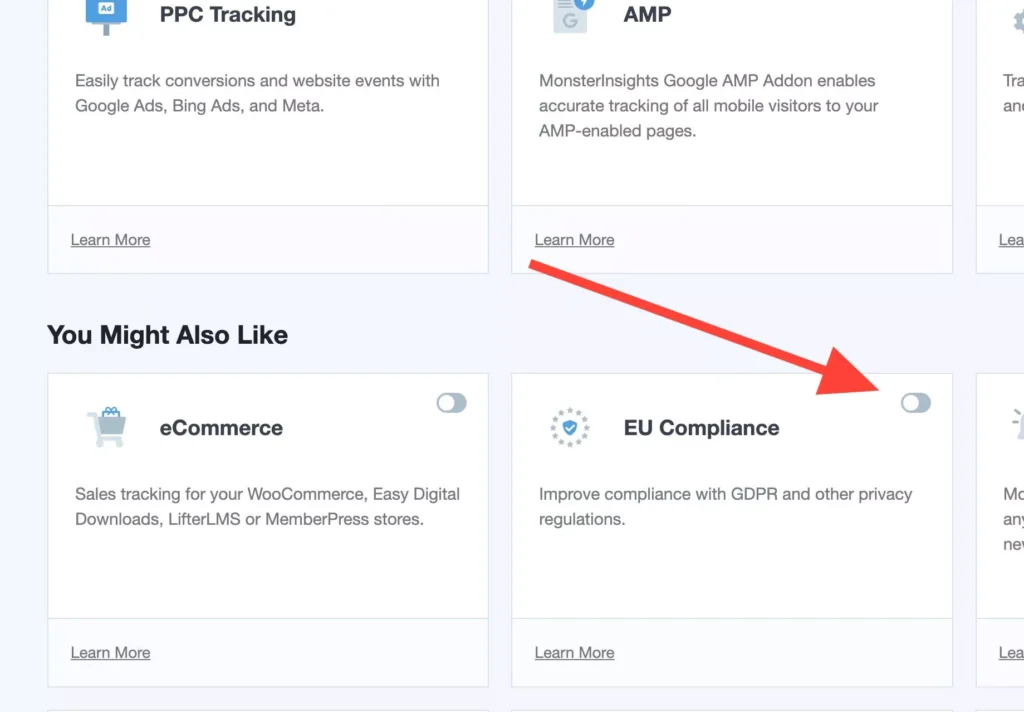
MonsterInsights has built-in features to help you stay GDPR compliant while still getting the analytics data you need.
The future of PPC belongs to advertisers who can be ethical and effective at the same time.
If you need a simple way to handle cookie consent on your WordPress site, WP Consent makes it easy to stay compliant without blocking your ability to track PPC conversions.
Key Takeaway
Privacy laws now require explicit consent before tracking visitors with PPC pixels and analytics cookies. WP Consent displays a compliant cookie consent banner that integrates seamlessly with Google Analytics, Facebook Pixel, and other tracking tools. It keeps you compliant while ensuring you don’t lose valuable conversion data.
Intent-Based Marketing Beats Keywords
Keywords aren’t dead. But they’re not enough anymore.
Google and Bing are getting smarter at understanding what people actually mean when they search, not just what words they type.
When someone searches for “how to get more leads for my home service business,” search engines now understand the context and intent behind that query. They’re not just matching words anymore.
How to Adapt to Intent-Based Marketing
Use broad match keywords with audience filters instead of relying only on exact matches.
Build Customer Match lists from your CRM data to target people based on their actual behavior.
Write ad copy that matches what users are trying to accomplish, not just the keywords they typed.
For example, instead of writing an ad that says “Plumbing Services – Call Today,” write copy that addresses the user’s problem: “Leaky Faucet? Same-Day Repair Available.”
Performance Max Needs Strong Signals (Not Just More Budget)
Performance Max uses AI to show your ads across Google’s entire network (Search, Display, YouTube, Gmail, and more). It decides where to place your ads based on what it learns from your campaigns.
These campaigns can work really well. But only if you set them up correctly.
How to Set Up Performance Max Correctly
The most important thing is to feed it clean conversion data from Google Analytics or your CRM.
I recommend MonsterInsights to track your conversions accurately. This way, Performance Max has good data to learn from.

Here are a few additional suggestions:
- Create quality ad assets.
- Include multiple headlines, descriptions, and images so the AI has options to test.
- Set clear audience signals.
- Tell Performance Max who your ideal customers are, even though it will expand beyond that.
- Review performance weekly.
- Check which assets and audience segments are driving results.
Many advertisers complain about lack of control in Performance Max. The solution isn’t to avoid it. It’s to give it better inputs.
Smart Bidding Strategies That Actually Work
62% of Google Ads professionals now use Smart Bidding, and that number keeps growing. Smart Bidding uses machine learning to set bids automatically based on your goals.
The two most common strategies for small businesses are:
- Target CPA (Cost Per Acquisition): You tell Google how much you’re willing to pay for a conversion, and it adjusts bids to hit that target.
- Target ROAS (Return on Ad Spend): You set a target return, and Google optimizes to reach it.
Which Bidding Strategy Should You Use?
If you know what a customer is worth to your business, use Target CPA. For example, if each new customer is worth $500 and you’re willing to spend $100 to acquire them, set your Target CPA at $100.
If you run an eCommerce store and want to optimize for revenue, use Target ROAS. This tells Google to focus on transactions that bring in more money.Pro Tip: Give your Smart Bidding campaigns at least 2-3 weeks to learn before making major changes. The AI needs time to gather data and optimize.
Voice and Visual Search Are Here to Stay
Voice search has arrived and it’s here to stay.
People are using Alexa, Siri, and Google Assistant to search for products and services every day. Voice search adoption continues to accelerate across all demographics, making it essential for PPC advertisers to adapt their strategies.

Visual search is also growing fast, particularly among younger users who prefer to search by snapping a photo rather than typing keywords.
How to Optimize for Voice Search
Use conversational language in your ad copy. People speak differently than they type.
Target question-based keywords like “how do I,” “where can I find,” and “what’s the best.”
Optimize for local search. Many voice searches include “near me” queries.
Make sure your landing pages load fast on mobile devices, since most voice searches happen on phones.
Visual Search Optimization
Create high-quality product images with clear backgrounds.
Add descriptive alt text to all your images. This helps Google understand what’s in the picture.
Use schema markup to help search engines categorize your products correctly.
Visual search is especially important for eCommerce businesses. When someone takes a picture of a product they like, you want your similar products to show up in the results.
Want to optimize your website for voice search?
Voice queries are longer, more conversational, and require a different SEO approach than traditional text searches. Check out their guide to make sure your site is ready for the voice-first future.
Multi-Channel PPC Is No Longer Optional
Running PPC on just Google Ads isn’t enough anymore.
Your customers use multiple platforms throughout their buying journey. They might see your ad on Facebook, search for you on Google, watch your video on YouTube, and then convert on your website.
The best results come from coordinated campaigns across multiple channels.
How to Build a Multi-Channel PPC Strategy
Here are some recommendations:
- Start with Google Ads for high-intent searches. People searching for “emergency dentist near me” are ready to buy.
- Add Facebook and Instagram for awareness and retargeting. These platforms are great for staying top-of-mind.
- Use LinkedIn for B2B campaigns. 65% of B2B companies have acquired customers through LinkedIn ads.
- Include YouTube for video content. Video ads get 90% more engagement than static ads.
The key is using shared audiences across all platforms. Build your Customer Match list once, then use it everywhere.
Track Your Multi-Channel Performance in One Place
Here’s the problem most businesses face: they’re running ads on multiple platforms, but their data is scattered everywhere.
You have to log into Google Ads, then Facebook Ads Manager, then LinkedIn Campaign Manager just to see what’s working.
MonsterInsights solves this by bringing all your advertising data into one dashboard.

With MonsterInsights now supporting six major advertising platforms—Google Ads, Microsoft Advertising, Meta Ads, TikTok Ads, Pinterest Ads, and LinkedIn Ads—you can finally see your complete marketing picture in one place.
Track both organic and paid performance side-by-side to understand your true ROI.
Instead of piecing together reports from multiple platforms, you can:
- See which ad platforms drive the most conversions
- Compare performance across all channels at once
- Track your entire customer journey from first click to purchase
- Identify which campaigns are actually worth your budget
- Make data-driven decisions without switching between multiple dashboards
Set up your ad tracking with MonsterInsights and get the full picture of your multi-channel PPC performance.
Joe Kroog
Recommended for all my clients. I develop, maintain and enhance many types of WordPress websites and build multi-channel marketing programs for my clients. MonsterInsights makes it easy to connect to a Google Analytics account and share the critical reports with my client without training them on GA. A big win. Keep up the great work.
Creative Quality Makes or Breaks Campaigns
I can’t stress this enough: your ad creative is more important than ever.
AI can optimize bids and target audiences, but it can’t make boring creative interesting.
Creative quality is what stops people from scrolling past your ads.
What Makes Good Ad Creative in 2026
- Use real people, not stock photos. User-generated content performs better than polished studio shots.
- Keep videos short. Aim for 15-30 seconds maximum.
- Add captions. Many people watch videos with sound off.
- Test multiple variations. Create 3-5 different versions of each ad to see what resonates.
One smart approach is studying what your competition is doing. The Meta Ad Library shows you exactly what ads your competitors are running. You can see their messaging, creative, and how often they update their campaigns.
Platform Updates You Can’t Ignore
Several platforms made major improvements in 2025 that carry over to 2026.
Google Ads Updates
- A/B testing in Merchant Center: You can now test different product feed variations to see what drives more sales.
- Lower Customer Match minimums: Google reduced the requirement from 1,000 to just 100 approved users. This makes Customer Match accessible to smaller businesses.
- Enhanced channel reporting in Performance Max: You can now see which channels (Search, Display, YouTube, etc.) are driving your results.
Microsoft Advertising (Bing) Updates
- Import Performance Max campaigns: You can now import PMax campaigns directly from Google Ads to Microsoft, saving setup time.
- AI-powered Copilot: Microsoft’s AI assistant helps with campaign creation and optimization.
LinkedIn Updates
- AI-driven campaign creation: LinkedIn now uses past performance to suggest campaign strategies.
- Improved event ads: Video content in event ads drives more engagement.
What’s Not Working Anymore
Now that you know all the major PPC trends for the year, let’s talk about what you should stop doing in 2026.
Automatically Created Assets (ACAs)
Google’s Automatically Created Assets sound convenient, but they’re causing problems.
ACAs generate ad copy automatically based on your landing page content. The issue? You can’t review them before they go live.
Here are some issues you might have with ad copy on ACAs:
- Doesn’t match the brand voice
- Includes products the business doesn’t want to advertise
- Misses important business nuances
So, I recommend you turn them off unless you’re willing to check your ads daily.
Blindly Following Google’s Recommendations
Google’s Recommendations tab in Ads wants you to spend more money. That’s how Google makes money.
Some recommendations are genuinely helpful (like fixing broken tracking). Others just push you to increase budgets or switch to broad match keywords.
Review each recommendation carefully before accepting it. Ask yourself: “Does this help my business goals, or does it just help Google’s revenue?”
Long Learning Periods on Small Budgets
If you’re running a time-sensitive campaign (like Black Friday), the learning period for automated campaigns can eat up your entire budget.
Performance Max and other AI-driven campaigns need data to optimize. On small budgets or short timeframes, they might never get out of the learning phase.
Solution: Start automated campaigns at least 3-4 weeks before major sales events to give them time to learn.
Ignoring Mobile Optimization
52% of all PPC clicks come from mobile devices.
If your landing pages aren’t mobile-friendly, you’re wasting half your budget.
Make sure your forms are easy to fill out on phones. Use large buttons. Keep form fields to a minimum. Test your landing pages on actual mobile devices.
Best Practices and Tips for PPC in 2026
Let me share some practical tips for managing PPC campaigns:
Start Small and Scale Up
Don’t try to implement every trend at once. Pick 2-3 that make the most sense for your business and start there.
For example, if you’re just getting started with AI, begin with Smart Bidding before moving to Performance Max.
Track Everything
You can’t improve what you don’t measure.
Set up proper conversion tracking in Google Analytics. MonsterInsights makes this easy for WordPress sites.
Track not just conversions, but also:
Test Constantly
The campaigns that win are the ones that test and iterate most often.
Test different:
- Ad copy variations
- Landing page headlines
- Call-to-action buttons
- Images and videos
- Audience segments
Run tests for at least 2 weeks before making conclusions. You need enough data to know if a change actually made a difference.
Focus on Quality Over Volume
It’s tempting to chase more traffic. But 100 highly-targeted visitors are worth more than 1,000 random ones.
Use negative keywords to filter out irrelevant searches. Build specific audience segments instead of targeting everyone.
Integrate PPC with SEO
Your PPC and SEO strategies should work together, not separately.
Use PPC data to inform your SEO strategy. If certain keywords convert well in paid search, create organic content targeting those same terms.
Check out the following guides for more information:
- Quick-Start Guide to Topical Authority in SEO
- How to Master SEO Search Intent to Improve Your Rankings
- Critical SEO KPIs to Track Now
- SEO Analytics and Reporting Tips to Boost Organic Traffic
Document Your Process
Write down what you’re testing and why. Keep notes on what works and what doesn’t.
This documentation becomes incredibly valuable when you’re training new team members or trying to figure out why performance changed.
Frequently Asked Questions About PPC Trends
What’s the biggest PPC trend in 2026?
AI-driven automation paired with strong first-party data. AI handles the execution, but you need clean conversion data and customer insights to make it work effectively.
Should I still use manual bidding?
Use manual bidding selectively for high-value campaigns where you need precise control. For most campaigns, Smart Bidding will perform better because it can process more data faster than humans can.
How do I prepare for the end of third-party cookies?
Focus on building your first-party data now. Collect email addresses, use Customer Match lists, and set up Enhanced Conversions. The sooner you start, the better positioned you’ll be.
Do I need to run ads on multiple platforms?
If your customers use multiple channels, yes. Most buyers interact with several platforms before making a purchase. Omnichannel campaigns reinforce your brand and lower overall acquisition costs.
Is Performance Max worth using?
Yes, but only if you set it up correctly. Feed it quality conversion data, create strong ad assets, and give it clear audience signals. Don’t just turn it on and hope for the best.
How much should I spend on PPC?
Start with what you can afford to lose while testing. Most small to mid-sized businesses spend $500-$5,000 per month to start. Scale up once you know what’s working.
Can I run PPC campaigns without a big budget?
Absolutely. Start with tightly targeted campaigns in your local area or a specific niche. Focus on high-intent keywords and build from there.
What’s the difference between Target CPA and Target ROAS?
Target CPA focuses on getting conversions at a specific cost. Target ROAS focuses on getting a specific return on your ad spend. Use CPA for lead generation and ROAS for eCommerce.
How long does it take to see results from PPC?
You’ll see clicks immediately, but meaningful conversion data usually takes 2-4 weeks. Give AI-driven campaigns at least 3 weeks to optimize before making major changes.
Should I turn off Automatically Created Assets?
I recommend turning them off unless you can check your ads daily. ACAs can create brand-unsafe content because you can’t review them before they go live.
I hope this article helped you learn more about PPC trends so you can boost your paid search revenue. If you liked this article, you may want to check out the following guides:
- Best PPC Automation Tools to Streamline Your Campaigns
- Predictive SEO: How to Stay Ahead of Search Trends Using Data
- How to Use Local PPC to Get More Customers (Beginner’s Guide)
Not using MonsterInsights yet? Get started today!
Finally, stay connected with us on YouTube for the latest Google Analytics and WordPress tips and tutorials.